

10 Classic Foods Pioneers Ate To Survive On The Oregon Trail
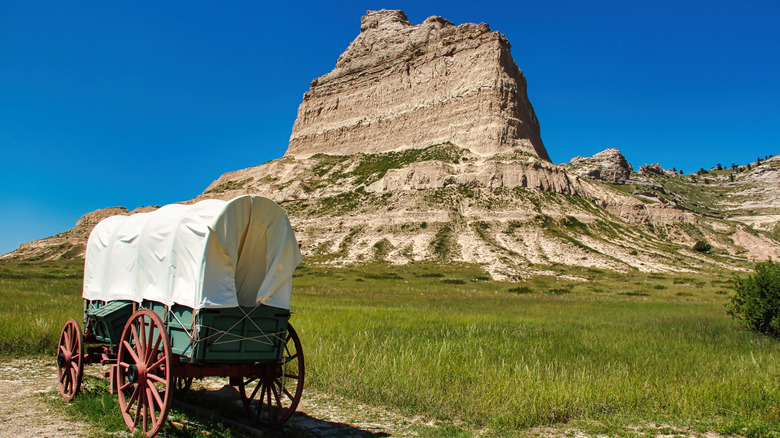
The Oregon Trail was a grueling path that started in Missouri and ended in Oregon State. Approximately 350,000 travelers loaded covered wagons with supplies and set out on the 2,000 mile journey, packing with them various foods designed to fuel long, arduous days. They were motivated by the Oregon Donation Land Law, passed by Congress in 1850, which promised large plots of land to white males and married white women; all they had to do was survive the road to get there. Meanwhile, the state was funding policies that systemically slaughtered and displaced Native people.
The Oregon Trail, though often romanticized, was hardly a place for luxury, and the foods that travelers packed were bare-bones. High-calorie, easy-to-transport, preserved foods were the ingredients of choice. We interviewed Andrej Mečíř, the founder and operator of Oregon Trail Educational Archive, to learn more about the foods that sustained pioneers. He says, "Most of the weight of a wagon was food. People had to be very resourceful and at the same time get used to eating basically the same things for months."
The true history of the Oregon Trail is not a pretty one, but learning about the past allows us to understand the present. The monotonous meals travelers ate on the journey weren't exactly enticing, but reading about them allows us to get a glimpse of history and appreciate what we have in the present. In fact, the food consumed on the trail points to just how recent these events occurred, as many of these meals are ones we still eat today.
Bacon
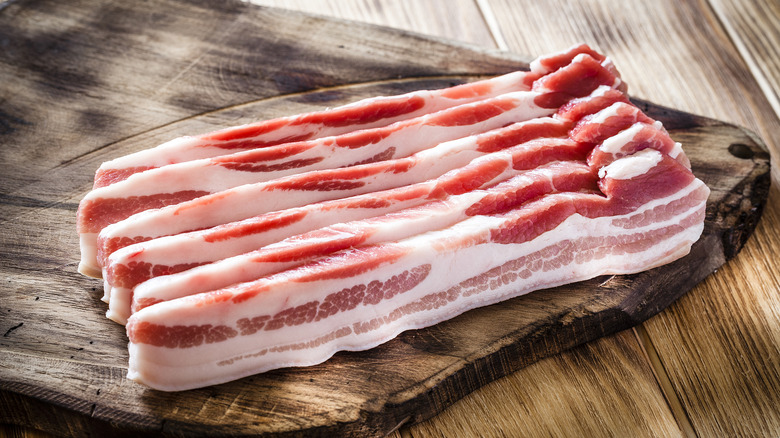
The smell of bacon cooking in the morning is one of life's simple pleasures. Its smoky, salty flavor is delicious, but for travelers on the Oregon Trail, the method for making bacon focused on preservation over flavor. Bacon is typically made of pork belly that's cured in salt and sugar to remove moisture and then smoked. Salting and smoking is an excellent way to keep meat stable for a long time before you actually cook and eat it. Andrej Mečíř notes, "Bacon was often so salty that [pioneers] washed it before cooking." While washing salt off your food before eating it may not sound particularly appetizing, that thick layer of salt was necessary for ensuring that moisture didn't cause the whole supply to go bad.
The journey to Oregon took, on average, 4 to 6 months to complete. Meats had to be preserved very, very well to last for that long, and given how fatty pork-belly bacon can be, extra measures were taken to ensure it lasted. Andrej Mečíř explains, "Fresh food would spoil very quickly in the heat without any refrigeration. Bacon was often packed in bran or flour so the fat wouldn't melt."
He adds that one of the most surprising things he's learned about the diet of travelers on the Oregon Trail is how utterly monotonous it was. One journal entry by emigrant Helen Carpenter reads: "One does like a change and about the only change we have from bread and bacon is bacon and bread."
Coffee
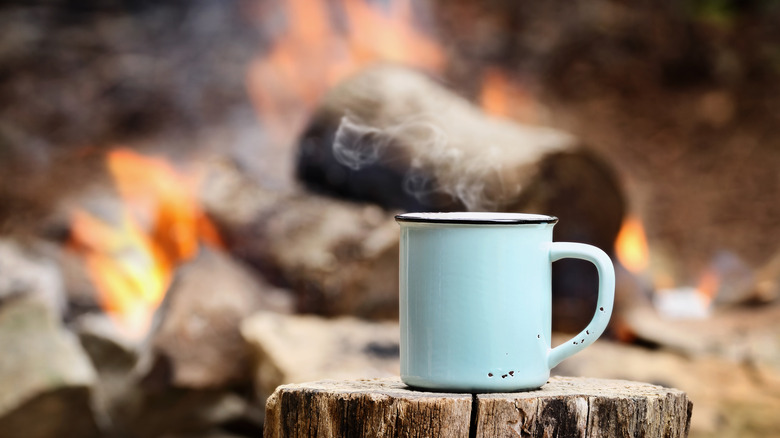
Approximately 2.25 billion cups of coffee are consumed around the world on any given day. For many Americans, not to mention people in just about every other country in the world, coffee is a daily staple. That $7 latte in the morning can feel like quite a luxury, so it may come as a surprise to learn that coffee was also an essential part of daily life on the Oregon Trail. Why were pioneers weighing down their wagons with coffee beans when it might seem much more practical to bring food instead?
Andrej Mečíř notes that there was a logical rationale behind drinking coffee, though pioneers may not have fully understood the science. "Coffee was almost sacred on the trail. Adults and children both drank it — not only for the energy, but mainly because it covered the taste of bad water. River water was often muddy, alkaline, and contaminated. When they boiled it into coffee, at least it was drinkable."
Germ theory was only just being developed around 1850, so it's unlikely that pioneers fully understood why boiling water for coffee as opposed to drinking water directly from a stream or river was helping to prevent illness, yet it did just that. Mečíř adds, "Most of the deaths on the Oregon Trail were not caused by Native American attacks, as movies and games often show. Those attacks were actually relatively rare. Far more people died from diseases, mainly cholera, dysentery, and typhoid. All of these spread through contaminated water and food. So coffee and boiling water were not only about taste, but unknowingly also about survival."
Bread
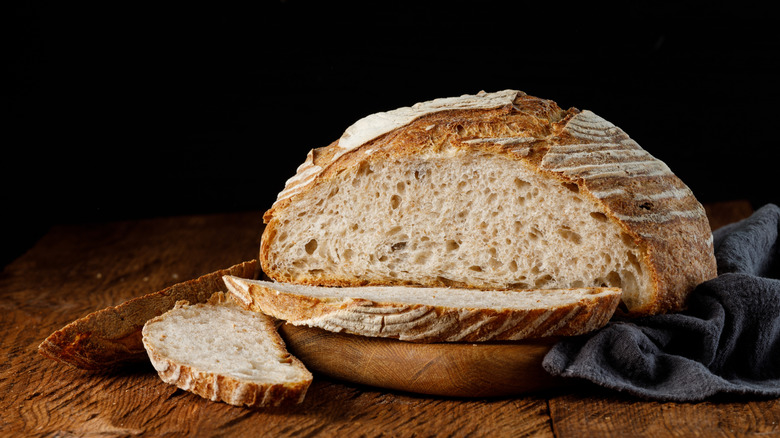
Bread was a staple on the Oregon Trail as much as it is now. In the book "The Prairie Traveler," which was published in 1859 to advise pioneers on how to survive their journey, U.S. army captain Randolph B. Marcy recommends that 150 pounds of flour be packed for each person — and this was only for the 110-day journey from Missouri to California. Of course, traveling with great sacks of flour presented its own dilemmas. Andrej Mečíř explains, "Heat, wet conditions when crossing rivers, or insects could ruin supplies. If flour got wet while crossing a river, they often had to throw it away."
Historical texts lay out several different methods travelers would use to leaven bread at the time, a popular one being a simple sourdough starter. There is one such starter still in use today that's said to have made the original journey across the Oregon Trail in 1847. You can even order dried portions of it online.
In "The Farmers and Emigrants Complete Guide" by Josiah T. Marshall, which was published in 1849 as a guide for settling pioneers, the author says, "Bread is the most important article for daily use, and great pains should be taken in making it," (p. 123). While eating bread everyday likely became monotonous, the same handbook includes a recipe for a bread made of wood, which the author describes as "by no means unpalatable," (p. 128). It's likely the pioneers didn't mind eating bread everyday when it was compared to such an alternative.
Johnny cakes

Cornmeal was also packed away in large quantities on the Oregon Trail, with half a bushel (equivalent to about 25 pounds) recommended per person. Like flour, cornmeal could be used in many different recipes, but one of the most popular was Johnny cakes. One of the classic foods cowboys used to eat, Johnny cakes are a pan-cooked flatbread or pancake.
Recipes for the dish range from bare-bones to luxurious, depending on what supplies travelers had in store. For example, a Civil War description of Johnny cakes describes mixing cornmeal, salt, and water and cooking it until it was hard and dry, almost like hardtack. Another recipe from one Mrs. Child in "The Farmers and Emigrants Complete Guide" describes a much more appetizing version of the dish made with sifted cornmeal, molasses, salt, shortening, lard or butter, and an egg. This batter was then fried in a well-greased pan over a hot fire.
Biscuits
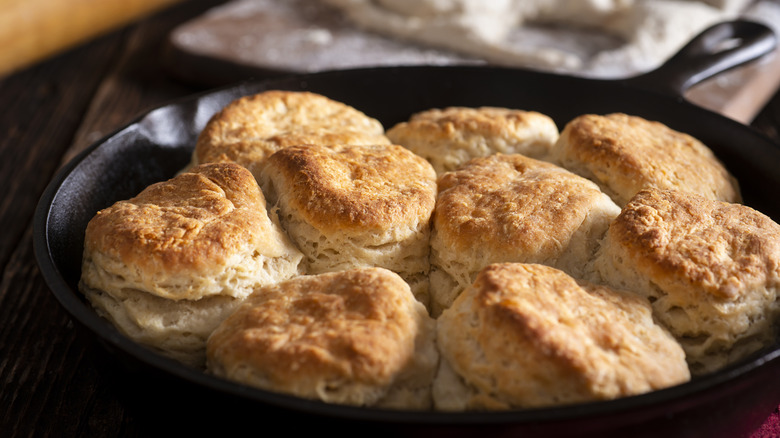
Nowadays, we can choose from a variety of canned biscuit brands to satisfy our cravings for something buttery and flaky. But on the Oregon Trail biscuits were beaten by hand and baked in heavy pans over an open fire, a process that required a bit of time and commitment. Given the conditions of the journey and lack of ingredients available, the biscuits of this time weren't always as light and fluffy as the classic Southern biscuits we know today.
There are a few recipes for biscuits included in "The Farmers and Emigrants Complete Guide" by Josiah T. Marshall. Some use flour, milk, shortening, and yeast, while another recipe for a "quick biscuit" uses sour cream, flour, salt, and saleratus. Saleratus is an old name for potassium or sodium bicarbonate, which was essentially a precursor to baking soda. In Wyoming there are several lakes which were known by emigrants as the saleratus lakes. These shallow lakes would dry up and leave a crust of snow-like powder behind — a supply of saleratus that was free for the taking. While it may seem unconventional to harvest a leavening agent from the edge of a lake, this product allowed travelers to make their biscuits more light and fluffy as opposed to hard and dense.
Beans
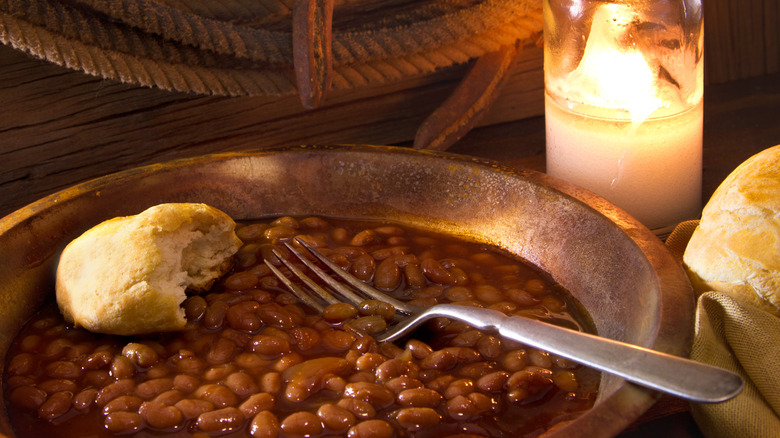
Preserving meat on the Oregon Trail could be difficult. It would require large amounts of salt or the time to dry strips of meat over a smoky fire. A much better alternative source of protein was dried beans, which were easy to pack and preserve for the grueling journey. They may not have had the same convenience as canned beans, but they did the trick. It was recommended to pack ½ to 2 bushels of dried beans per person, with a bushel of beans weighing about 60 pounds.
Beans are a nutrient-rich food that have important vitamins and minerals like potassium, magnesium, iron, folic acid, and vitamin B6. ½ cup of dried kidney beans can contain 8 grams of protein and 8 grams of dietary fiber, the latter of which was especially important for the travelers whose diets were lacking in greens.
Just like how canned baked beans often have bacon in them, beans on the Oregon Trail were typically prepared with pieces of pork or bacon for added flavor, fat, and protein. "The Farmers and Emigrants Complete Guide" instructs pioneers to soak the beans overnight in a covered pot before changing the water the following morning and slowly cooking the beans until soft. Then, a piece of pork would be added to a dry pan and the beans and pork would be cooked together for several hours.
Wild game
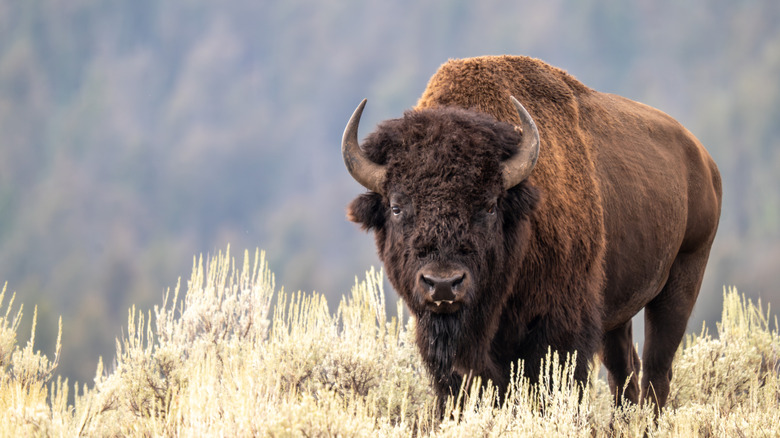
Hunting was an important part of survival on the Oregon Trail. Whether travelers were running out of protein or simply craving fresh (rather than preserved) meat, it was vital to be able to catch wild game. Andrej Mečíř explains, "At the beginning (Missouri and the prairies), [travelers] ... had the best opportunities to hunt buffalo and gather buffalo chips for fuel. In the mountains the wood was better, but hunting was harder and supplies were already running low." Buffalo chips are pieces of sun-dried buffalo dung found on the prairie and used as a fuel source when wood was scarce. Mečíř adds, "It burned fairly well and didn't smell too bad when it was dry."
If travelers couldn't catch wild game, they often had to resort to eating their pack animals. Randolph B. Marcy describes in "The Prairie Traveler" the level of hunger experienced by his group while on a winter expedition through the Rocky Mountains. "Our poor mules were dropping down from exhaustion in the deep snows, and our only means of sustaining life was upon these starved animals."
Meat from hunting was, of course, much preferred to eating one's pack animals, as mules and horses were essential for carrying supplies. Meat from buffalo, antelope, rabbits, and birds could be dried into jerky and preserved for the journey or enjoyed fresh. Mečíř says, "Day after day it was often the same thing — bacon, beans, bread, and coffee. When they managed to hunt something, it was a big and very welcome change for everyone."
Hardtack
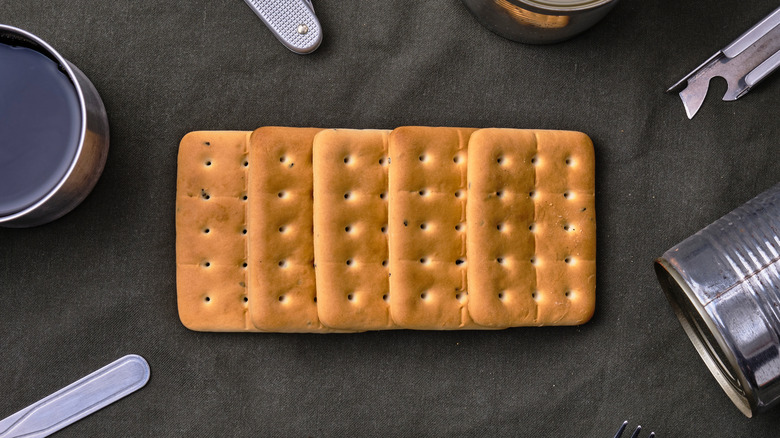
When it comes to foods designed for survival, hardtack is pretty much the definition. Made from flour, water, and salt, the dough is baked into hard, square crackers that are dry enough to last for long periods of time. Andrej Mečíř says, "[Travelers] mainly packed things that would last for months, were high in energy [calories], and didn't take up too much space." Hardtack was the perfect ration to fit this bill, with approximately 75 to 100 calories in one 3-square-inch piece and the ability to be shelf-stable for years.
Now, eating a food that is dried to the point of shelf-stability is easier said than done, which is why hardtack earned nicknames like "sheet iron crackers" or "tooth dullers" during the Civil War. Mečíř adds, "Hardtack was so hard that it had to be soaked in coffee or water." Soaking the hardtack in a hot drink would not only soften its bite, it also had the added benefit of killing off any worms or bugs that may have laid eggs inside the delicacy. Once dead, the worms would float to the top of the beverage where they could be easily plucked out before the meal was finished.
Dried fruits and vegetables
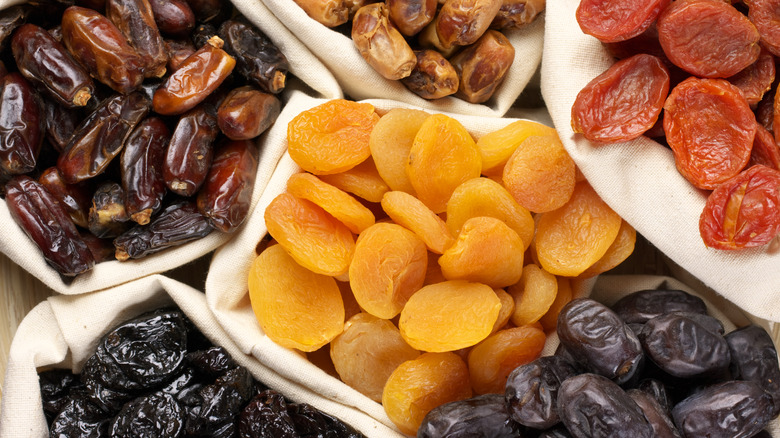
Calorie-dense foods were key to survival on the Oregon Trail, and fruits and veggies didn't exactly fit the bill. Still, as we know now, the nutrients that plants contain are vital to maintaining one's health, and going without them caused many problems for pioneers. Scurvy, which is an illness caused by prolonged vitamin C deficiency, was as much a killer on the trail as cholera and other contagious diseases. Thus, it was advised that travelers bring 1 to 2 bushels of dried fruit per person.
In "The Prairie Traveler", Randolph B. Marcy says, "Dried vegetables are almost equal to the fresh, and are put up in such a compact and portable form as easily to be transported over the plains." Before convenient dehydrators were invented, the simplest way to dry fruit and vegetables was in the oven. Marcy goes on to describe his preferred method for packing vegetables on long journeys, which included slicing the produce thin, pressing the slices, and then drying them in the oven. He adds, "I regard these compressed vegetables as the best preparation for prairie travel ... A single ration weighs, before being boiled, only an ounce, and a cubic yard contains 16,000 rations."
Like hunting, foraging also provided the opportunity for pioneers to prolong their supplies by eating from the land. Andrej Mečíř says, "They gathered berries, wild onions, and other plants."
Salmon
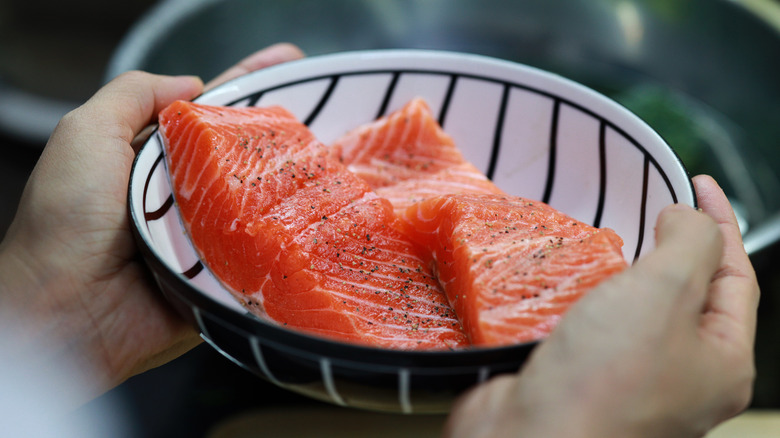
After a long journey through The Great Plains there was one food in particular that travelers on the Oregon Trail could look forward to when entering the Pacific Northwest: salmon. Andrej Mečíř says there were many foods travelers would look forward to enjoying on special days, like fresh meat, berries, or even pie, but, "When they got closer to Oregon and could trade for salmon or potatoes, it was a big change."
There is one story that took place near Fort Hall, Idaho, in which General McCarver believed he saw some Native Americans hoisting a red flag, signaling that they intended to fight. He prepared his men to confront them, only to discover once they got closer that what he had thought was a red flag was actually a salmon split open, being offered for sale.
There's no doubt that after months of hardtack, salty bacon, and dried beans, salmon was a welcome change. One diary account by David Maynard in September of 1850 says, "On our way here at Powder River we killed a noble salmon, taking breakfast out of him, and a fine dish it was," (p. 60).